Lue Elizondo: “There’s No Going Back” on UFO Disclosure
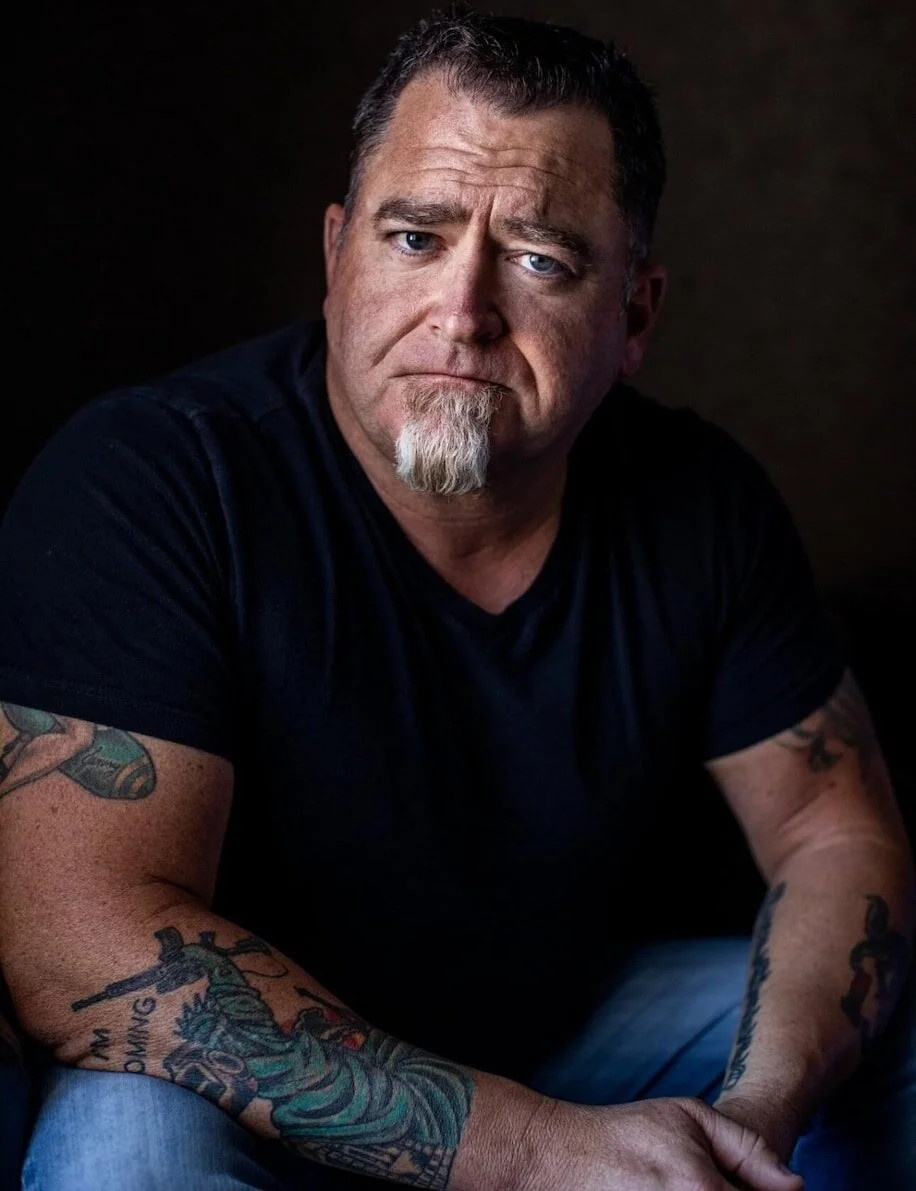
Written by Christopher Sharp - 3 June 2026
It has been almost a decade since Lue Elizondo first emerged as one of the most prominent public faces of the modern UFO / UAP issue, following the New York Times’ 2017 reporting on AATIP, the Pentagon’s secretive Advanced Aerospace Threat Identification Program.
In an exclusive interview, Elizondo shares perspectives and personal observations in a way he has not yet done with anyone else.
He gets candid and personal, sharing a side of himself I suspect he has kept closely guarded for years.
At the beginning of our interview, Elizondo tells me without prompting that there’s no going back from the Unidentified Anomalous Phenomena (UAP) disclosure process, which appears to have accelerated under the Trump administration.
It’s a process which he arguably kick-started in public.
He adds,
“I knew that there would come a point where there’s no going back. Make no mistake about it. I realize I started this conversation for better or for worse.
“I started this train rolling down the tracks and the responsibility to see this through is on my shoulders.”
I have known Lue Elizondo for close to five years. We first met on a bitterly cold day at Soho Farmhouse, tucked away in England’s Cotswolds.
He was there with Dan Farah, director of The Age of Disclosure, as they prepared for a GQ Heroes event.
As he was when I first met him, Elizondo is still enthusiastic, energetic and relentlessly positive.
Part of that intensity, he tells me, comes from the way he sees the world.
For some time, I have known Elizondo has been keeping something private. Something not related to UAP disclosure, but something nonetheless that may ultimately influence his ability to see this through.
Elizondo is on the autistic spectrum. When I ask whether I can share his condition for this piece, he immediately says yes.
Elizondo’s autism has always shaped the way I see him, especially because of my own family experiences.
He shares with me that when he was younger, it could be “very debilitating”, and that he struggled for years without having a name for why he felt different.
“I never fit in as a kid, as bad as I wanted to,” he says. “I didn’t think like them. I didn’t fit in.”
But he adds that self-awareness of being different eventually allowed him to turn his autism into something useful.
“It wasn’t until I became self-aware of my condition that I was really able to use it to my advantage,” he tells me.
For Elizondo, that difference also shapes his moral outlook.
He says he has often been told by others that the world is made up of shades of grey.
“But I don’t believe that,” he says. “I believe there is a definitive difference between right and wrong.”
That may help explain why UAP disclosure, for him, is not simply a policy question. It is a moral one.
But on this day, while talking to me and driving his truck to Texas, he also seems more reflective, perhaps more aware of the weight of what he helped set in motion and its implications.
“History will remember me one of two ways, either as a patriot, or being the biggest villain in history... and all I can do is hope and pray every day that I made the right decision,” he tells me.
The shock may be what disclosure says about us
When Elizondo talks about UAP disclosure, he is not simply talking about governments admitting that strange objects have been seen in the skies, oceans and outside of Earth’s atmosphere. And, oh yes, they’re of non-human origin.
He is talking about something deeper and potentially more destabilising: the possibility that the public may have to rethink what it means to be human.
Asked what disclosure may mean psychologically, Elizondo tells me there will be “some level” of what he calls “ontological shock” when the public becomes “acutely aware” of the situation.
But he insists that shock does not have to be destructive.
In previous interviews, he has hinted at a somber reality behind UAP and potential advanced non-human species engaging with humanity.
He shares with me what he means by somber and actually reframes it.
“Being somber isn’t always necessarily bad,” he says. “Somber can actually be a good thing because it forces a recalibration and a recalculation of our mindset, forcing us to reconsider our own preconceived notions and narratives.”
For Elizondo, the real challenge may not be the existence of non-human intelligence itself.
It may be what that intelligence says about us.
“We are going to continue to show evidence that will absolutely challenge some current ideas and convictions about humankind and possibly even our evolution,” he says.
Elizondo suggests that much of the fear around the UAP issue comes from human ego and from the assumption that mankind sits alone at the top of creation.
“Most of the fear comes from a sense of ego that human beings have about themselves,” he tells me. “We always consider ourselves the alpha species and pride ourselves as being masters of our own destiny.”
He then turns to one of the most unsettling possibilities raised during our conversation: that whatever is behind the phenomenon may not be entirely separate from us.
Alleged non-human beings, such as Nordics and Greys, are broadly reported with humanoid features, such as two arms, two legs, and similar symmetry.
Elizondo asks whether it is possible that humans and non-human intelligence “share a common ancestry”.
He adds that alien life may have “really evolved right here”.
Or, he suggests, humanity may have evolved somewhere else from a shared ancestral origin before ending up here on Earth.
He does not present this as a settled conclusion.
But he does suggest that, if governments reveal what they truly possess, the public may be forced to ask far more serious questions than whether UAPs are real.
Biologics, hybrids and human evolution
The conversation then turns to biologics and hybrids, a topic that he has recently touched on for the first time.
For years, others had predicted that he might eventually be forced into this territory.
Former CIA analyst John Ramirez put it bluntly four years ago:
“Hybridization. That’s the word that Lue Elizondo can’t say that everyone in the Pentagon is expecting him to say someday... It’s that we’re all [alien] hybrids.”
When I raise the subject, Elizondo is careful.
He says the issue takes the conversation into “biologics”, an area that he says was not his personal focus inside AATIP.
“I made it very clear, back when I was in AATIP, I was a nuts and bolts kind of guy,” he tells me. “I did not focus on the biologics, which, when you talk about hybrids, that’s where you have to go.”
But then he adds something more striking.
“There were people in my organization that were definitely focused on it,” he says. “And I’m not going to sugarcoat it. They were.”
According to Elizondo, those individuals included trained scientists, immunologists and people with a deeper understanding of human biology than his own.
He says he does not want to stray too far outside his area of expertise. But he acknowledges that some of those around him had reached deeply unsettling conclusions.
“They were convinced that there was some sort of interference, if you want to call it that, of human evolution at some point in the past,” he explains.
Elizondo is careful not to define what that interference might mean.
He does not say it proves humans are hybrids.
He does not claim to know whether it involved genetic alteration, mutation or influence by some other mechanism.
“Whether that’s a genetic genome that has been changed or purposely mutated, or that is some sort of influence, I don’t know,” he says.
“That was never my area of expertise and I am only repeating what I heard.”
Still, he says he trusted the people who were focused on that aspect.
“I do know individuals whom I trust who were very passionate about that particular aspect”.
Then he brings it back to the same somber question.
“If that’s the case, if that’s true, then how much control of our own destiny do we really have?” he asks. “And are we predestined to be, you know, someone else’s pet monkey?”
It captures the darkest edge of Elizondo’s thinking.
The shock of disclosure may not be that non-human intelligence exists. The shock may be that it reveals something about us, our history, our biology and perhaps even the limits of human agency.
The Moon
If disclosure can force humanity to rethink itself, Elizondo suggests it may also force us to rethink the places we assume are lifeless.
That is when the conversation moves to another startling topic: the Moon.
Asked whether he has any knowledge, directly or indirectly, of non-human intelligence being on the Moon, Elizondo answers with one word. “Yes.”
When I ask whether he can elaborate, he comments:
“There are classified sources of information that I am unable to elaborate,” he says, “that indicate that the Moon is or was perhaps of particular interest by something or someone else other than us.”
Elizondo adds that as humanity returns to the Moon and establishes a more permanent presence there, he suspects discoveries may follow.
“Let’s face it, after years of denial, NASA has finally released photos from the surface of the Moon that depict anomalies.”
Elizondo is referring to the latest tranche of files released by the Trump administration, where recordings of NASA astronauts and photos reveal mysterious encounters during the Apollo 12 and Apollo 17 missions.
“I highly suspect we’re going to begin to discover hints of habitation or artefacts,” he says, “very similar to what we may be seeing already on Mars, and that life may be in fact much more pervasive than we thought.”
But he says future exploration may also force humanity to widen its assumptions about life itself.
“We are a carbon life form,” he states. “Would we even know, would we even be able to recognize a true alien life form that doesn’t play by the rules we do?”
He challenges the idea that life must conform to the conditions familiar to humans.
“There is no such thing as a Goldilocks zone,” he says. “That’s only a Goldilocks zone for us. But not necessarily anything else. We have seen right here on Earth that life can survive in extreme environments, and in fact thrive”
That, for Elizondo, is part of the broader lesson: humans may have built their scientific and philosophical assumptions around themselves, only to discover that reality is stranger and less human-centred than expected.
“If there’s one thing we are right about,” he says, “it’s that we’re usually wrong at first.”
Capabilities, intent and the danger of miscalculation
Elizondo distinguishes between capabilities and intent, the two variables he says are needed to determine whether something represents a threat.
“To determine if something is a national security threat, you must first understand two parts of an equation,” he tells me. “Capabilities versus intent.”
With UAPs, he says, the capabilities have been demonstrated.
“We have seen some of the capabilities. But we have no idea the intent.”
He warns against assuming that even classified analysts can know the motives of a non-human intelligence.
“There may be people in the US government who think they know the intent.
“But the reality is there’s no way to confirm it.”
The promise and danger of new technology
Uncertainty also shapes how Elizondo thinks about technology associated with UAP.
If disclosure eventually reveals not only non-human intelligence but technologies derived from, inspired by or connected to the phenomenon, he says the implications would not be automatically utopian.
But Elizondo does not confirm claims within UAP circles about zero-point energy or any specific classified breakthrough linked to UAP technology.
When I ask whether disclosure could involve new technologies, he answers in broader terms.
“Technology is neither good nor bad,” he explains. “It is the human application of it and how it’s applied that makes it good or bad.”
Elizondo adds that disruptive technologies may bring enormous opportunities, but also serious dangers.
“All of a sudden, now, you no longer have to fly at 500 miles an hour in an aeroplane.
“Imagine if you could cut down your flight to go from New York to LA in only 10 minutes.”
But that same capability, he warns, could become a weapon:
“If a country, an adversary did that and strapped up some sort of deadly device to it, you can also see that’d be a problem.”
For Elizondo, technology does not automatically elevate a civilisation. It amplifies what is already there.
“Technology and artificial intelligence are both amplifiers to the current state of society,” he says. “And it can be good or it can be bad.”
The risk of shooting first
If technology can amplify both wisdom and recklessness, then the next question becomes unavoidable: what happens if human beings have already tried to confront the phenomenon aggressively?
When I ask Elizondo about allegations that some elements may have been involved in efforts to shoot down and retrieve UAPs, he does not confirm the claim.
But he warns strongly against the idea:
“I think it is extremely reckless for us to provoke any type of hostile action against something we don’t know the full capabilities.”
Elizondo explains that the only circumstance in which such action could be justified would be if there was a clear hostile intent:
“The only way I would say that’s justified [is] if we saw some sort of hostile intent.”
Elizondo contrasts that with Project Interloper, a Pentagon-era concept he has previously described as a plan to anticipate where UAPs might appear and place sensors nearby to collect data, telemetry and points of origin or departure.
In his telling, it was a passive intelligence-gathering operation, not a plan to shoot anything down.
“Our plan wasn’t to take any kinetic action,” he says. “It was just to have a bunch of collection sensors nearby where we could collect information, such as telemetry, data, and points of origin, points of egress, etc.”
He compares it to putting out food to attract a bear so it can be photographed.
Observing, he says, is one thing. Shooting is another.
“That doesn’t mean you should go ahead and shoot it. I think that’s reckless.”
The danger, he warns, is that such action could provoke a response humanity may not be prepared for.
“You could provoke something that we would wind up regretting tenfold,” he warns.
That may be why, when asked whether immunity may be needed for people involved in such activities to come forward, Elizondo immediately says yes.
Amnesty and the Legacy Program
In Washington, the next stage of disclosure is increasingly being discussed not just in terms of hearings and file releases, but in terms of protection, immunity and whether those inside alleged legacy programs can safely come forward.
Although Elizondo didn’t confirm it with me, it has long been speculated that he is a friend of outgoing Director of National Intelligence Tulsi Gabbard.
Elizondo has also been a guest on Donald Trump Jr.’s podcast regarding disclosure efforts.
Names including John Podesta, RFK Jr., James Mattis and James Clapper have been linked to Elizondo in public discussion, along with senior members of Congress, although Elizondo remains tight-lipped about those associations.
Elizondo has been central to advocacy efforts within Washington since speaking out in 2017.
Following recent file releases from the Trump administration, there are now rumblings of executive orders being on the agenda, providing amnesty to UAP whistleblowers.
At a recent speaking event in Dallas, Elizondo was joined by fellow disclosure advocate Representative Eric Burlison of Missouri, who told the audience that White House Deputy Chief of Staff Stephen Miller had discussed the possibility of amnesty for UAP whistleblowers.
Burlison proposed a 60-day window for individuals with relevant information to come forward.
When I ask Elizondo whether amnesty, executive orders or immunity may be needed for whistleblowers or people involved in past activities to speak openly, Elizondo is unequivocal. “Yes, absolutely,” he says.
He tells me that those who come forward need amnesty.
“We have to give them amnesty.
“Otherwise, you have to do kind of like a truth and reconciliation.”
“If we want to get past this, we have to give immunity.”
Elizondo believes many people involved in legacy efforts may have believed they were acting patriotically, even if the system itself became legally or morally questionable.
“I believe most people in the Legacy Program want to come out. I believe honestly in their hearts, they thought they were doing the right thing at the time by denying the program’s existence,” he says.
“They were patriots.”
Elizondo explains that some considered the topic so sensitive that “nobody could be briefed on it, not even the president.”
But Elizondo disagrees.
“Now, I think legally that’s wrong,” he adds. “But I can understand that sentiment.”
When I ask whether there are people within the Legacy Program who would like to brief the president but cannot currently do so, he replies: “Yes, absolutely.”
He says such people need protection in public:
“You may even have to create some sort of witness protection program.”
“These folks are scared.”
According to Elizondo, they have families, children, friends and lives they do not want to jeopardise.
“They don’t want to jeopardize that,” he tells me.
He also believes there may now be a split within the legacy world.
“I think that there are now two factions within the legacy effort.”
The MJ-12 question
That leads me to ask him directly about one of the most controversial names in UAP history: MJ-12, or Majestic 12, the alleged secret group long claimed by some researchers to have controlled the deepest UAP secrets after Roswell.
Elizondo’s answer is cautious. He does not say the name MJ-12 is still accurate.
Instead, he suggests that while the name may have changed, the underlying structure may still exist.
“We can honestly say it doesn’t exist because the name has changed,” he says. “Keep in mind, MJ-12 was named after the original 12 gatekeepers.”
Then he poses a question of his own:
“Why hasn’t anybody asked about MJ-27?”
When I ask if there is an MJ-27, he declines to elaborate.
But he explains how, in his view, an official denial could be technically true while still concealing the broader reality.
“Hypothetically, somebody in the government, if you said, does MJ-12 exist, they say no,” he explains. “Well, because maybe it’s not MJ-12 anymore. Maybe the boats got a little bigger.”
Then he stops himself:
“But, I cannot confirm or deny.”
It is a classic Elizondo answer: cautious, lawyerly and constrained by what he says he cannot discuss.
When I asked him earlier about the CIA’s Office of Global Access - an organisation allegedly involved in UAP retrieval missions - he told me he is not allowed to discuss any specific organisation or agency in their participation in the Legacy Program other than what he has been cleared to say by the Pentagon.
“I cannot mention any specific organization or agency.
“I can’t do that.”
He says doing so would be “reckless”, adding that he wants to allow the government time to do its job.
I have always sensed an urgency with Elizondo.
He named his own book ‘Imminent’.
That combination of urgency and restraint is what makes the political question surrounding UAP so pressing.
If Elizondo still cannot say everything he knows, then the issue becomes whether governments are prepared to move before events force them to.
A race with China
There is also a geopolitical race running through the disclosure debate.
When I bring up China, Elizondo says the international competition over UAP disclosure is already underway.
“They’ve already admitted they have their own UFO program,” he states. “That’s not speculation. China already admitted that.”
Elizondo appears to be referring to reports from 2021 that China’s military was using artificial intelligence to track and analyse UAP reports, after human analysts were reportedly overwhelmed by the volume of sightings from military and civilian sources.
He also refers to the Five Continents Initiative and adds:
“We’re well into the race. That dog has already left the kennel and it’s gone, baby.”
The Five Continents Initiative was a Chinese-backed 2018 effort, centred on international UAP conferences in China and Moscow, to build a worldwide UAP research organisation that could gather representatives from multiple countries and ultimately bring the UAP issue to the United Nations. Although it is worth noting that there is no public evidence of direct Chinese government involvement, at least at a national level.
When I ask whether there is a danger that China could disclose before the United States and claim possession of a craft of non-human origin, Elizondo does not frame it as a danger exactly.
“I don’t think it’s a danger,” he says. “I think it’s a missed opportunity on our part politically.”
For him, the concern is not simply that China may speak first. It is possible that the United States could lose the initiative on one of the most consequential announcements in modern history.
“I think politically, it’s a mistake to allow somebody else to make that announcement,” he tells me.
Later, when I ask whether the United States is losing ground to China, Elizondo is careful but direct:
“I am concerned we might be losing ground to our adversaries.”
He does not say China has made a specific breakthrough.
But his concern is clear: if there is a race to understand, exploit or disclose the phenomenon, the United States may not be running alone.
Britain cannot assume this is America’s problem
As a Brit, I suddenly fear that my own country, the United Kingdom, could be left behind if the United States, under an unpredictable and increasingly unilateral Trump administration, chooses to accelerate disclosure.
After all, Britain has already had a recent reminder of how quickly Washington can move.
During the Iran crisis, Britain was not involved in the initial US-Israeli strikes, and reporting suggested British officials were not given the exact operational details or timing before they happened.
If that can happen on an issue as consequential as military action in the Middle East, then it is not difficult to imagine Britain being caught by surprise if the United States suddenly decides to move faster on UAP disclosure.
For the United Kingdom, Elizondo’s message is direct.
Asked what he would suggest if he were speaking to the British Prime Minister, Keir Starmer, he is careful to say it is not his role to advise anyone.
But he says the UK should begin serious internal discussions now:
“I would suggest to him [Keir Starmer] that they begin to have sincere conversations internally right now.”
Elizondo says he personally saw legacy information-sharing agreements between the United Kingdom and the United States relating to UAP.
“There are legacy information sharing agreements, because I saw them,” he says. “Between the United Kingdom and the US.”
He also says he has been personally privy to older UAP reports that were releasable to the UK.
“We know the UK has the information and we know the UK has had their own encounters,” he tells me.
For now, he says, the discussion should begin internally:
“I think the time has come for an internal, not a public conversation yet, an internal heart-to-heart conversation with MI5, MI6, GCHQ, the Crown, and certain elements in Parliament.”
His warning is simple: the UK should not be caught unprepared.
“What you don’t want to do is get caught flat-footed,” Elizondo warns. “You don’t want to be behind the eight ball in this conversation.”
That warning reflects the strange position Elizondo still occupies: urging governments to prepare for disclosure while remaining bound by the secrecy system he came from.
Still constrained by secrecy
Speaking to Lue has always been a pleasure.
But I have always sensed his frustration about what he can and can’t say.
When I ask whether he remains unable to discuss some of what he knows, he answers without hesitation. “100%, yes,” he says.
But he adds that, if the Trump administration handles disclosure properly, he may never need to tell that story himself. He tells me:
“Hopefully, if the administration does this right, I will never have to tell my story, because it will be told for me by someone else.”
It is a telling admission.
Elizondo is pushing disclosure forward along with other public and private figures, while still living inside the rules and restrictions of the intelligence world he came from.
“That’s the world of an intelligence officer,” he remarks. “You take an oath and you live and die by that oath.”
A struggle we may not understand
Elizondo acknowledges that some within the UAP world discuss the possibility of competition between different non-human groups.
“There is... this discussion that there may be some sort of competition,” he comments.
He points to the Nuremberg events of the 1500s, where witnesses described what appeared to be “some sort of aerial combat or aerial dogfight or display of show of force” involving different shapes of craft. He does not say humanity is a proxy in such a conflict.
The idea hangs over the darker parts of our conversation.
If there are competing forces behind the phenomenon, and if human beings have been influenced, used or encouraged by something else, then the question becomes disturbing: are we actors in this story, or instruments within a struggle we do not understand?
Elizondo also distinguishes orbs and structured craft, such as saucers or triangles.
When I ask whether he distinguishes between the two, he answers immediately:
“Yes, yes, absolutely, absolutely.”
“One can carry occupants, the other cannot,” he says.
“Orbs don’t carry occupants. We haven’t had a single case where orbs had occupants inside.”
By contrast, he says, a “nuts and bolts” vehicle implies something very different.
“Once you start bending metal,” he says, “that’s to put somebody inside. Or something inside.”
For Elizondo, orbs may be closer to probes or drones.
He describes them as potentially “an efficient way” to collect information, adding that some could be neutral, while others may be “potentially harmful if you get close.”
His caveat is important: he says this is his personal view and that his view can change.
In his framing, not all UAPs are the same thing.
Some may be remote or unmanned probes.
Others may be structured vehicles capable of carrying occupants.
That question is what brings me back to one of the darkest metaphors ever attached to the modern disclosure movement.
The Uncle Jimmy problem
Perhaps the most disturbing moment in our conversation does not come when Elizondo talks about the Moon, MJ-12, biologics or legacy secrecy.
It comes when I raise a passage from Secret Machines: A Fire Within, the novel connected to Tom DeLonge’s early disclosure effort.
Elizondo was himself part of that wider effort, later serving within DeLonge’s ‘To The Stars Academy’.
The same circle also drew in figures from the intelligence, defence and aerospace worlds, including retired U.S. Air Force Major General William “Neil” McCasland, the former commander of the Air Force Research Laboratory, whose recent disappearance has fuelled intense speculation inside the UAP community.
DeLonge counted McCasland and other senior intelligence and defense officials as advisors while writing the book with A.J. Hartley.
In one scene, a character tells the story of Uncle Jimmy, a farmer who uses terriers to clear out rats.
The dogs do the work.
The rats are killed.
But when the job is done, Uncle Jimmy turns on the dogs too.
To him, they were not companions. They were tools.
The meaning of the story is not simply cruelty. It is a hierarchy.
The rats and terriers may think they are the opposing sides.
Victims and hunters.
Enemies locked in conflict.
But neither is truly in control.
The farmer is.
It suggests that humanity’s relationship with at least one form of non-human intelligence may not be benevolent at all, but darker, more transactional and more difficult to comprehend.
I ask Elizondo whether that story haunts him.
His answer is not comforting:
“Well, let’s take it a step further.”
The story sounds cold and terrible, Elizondo admits.
But he asks me to look at it from Uncle Jimmy’s perspective.
Perhaps, he says, the issue is not simply that the dogs are no longer useful.
Perhaps Uncle Jimmy does not want his rat problem to become a dog problem.
“Maybe it’s not that he doesn’t need them anymore,” Elizondo says.
“But he doesn’t want his rat problem to now become a dog problem. Jimmy knows by getting rid of the rats, he is now stuck feeding and taking care of the dogs”
That is the part that lingers.
Because if humanity has been shaped, used, observed or encouraged by something else, then what happens when our usefulness, whatever that may be, changes?
Elizondo does not say that is what is happening when it comes to UAP.
But he does ask us to think beyond human assumptions.
“What if NHI doesn’t have compassion or emotion?” he asks. “It’s just logic, like some sort of artificial intelligence.”
That may be the darkest implication of all.
Humans naturally imagine non-human intelligence in human terms.
We ask whether it is benevolent or hostile, whether it wants to help us or harm us, whether it is spiritually advanced or militarily threatening.
But Elizondo warns that those may be the wrong categories. If something is truly non-human, it may not share our empathy.
It may not share our morality.
It may not even understand why we would expect it to care.
“We can’t expect non-human intelligence to have human values,” Elizondo says.
“That would be absurd and completely naive of us.”
And that brings the disclosure question back to its most unsettling form.
Perhaps the shock is not simply that UAPs are real.
Perhaps it is not even that non-human intelligence exists.
Perhaps the real shock is that humanity may have misunderstood its place in the story.
We may not be the rats.
We may not be the terriers anymore.
We may not be the farmer.
And if the farmer ever comes back, the question may be whether humanity has grown enough intellectually and morally.
Nearly five years after I first met Elizondo in the quiet of the Cotswolds, he still sounds like a man trying to force history forward while obeying the rules of a world built to keep history hidden.
The disclosure train, he believes, is already moving.
But if the story of Uncle Jimmy means anything, it is this: the real question may not be whether disclosure can still be stopped.
It may be about what happens when the work is done.